When your goal is to visit every national park in the US, there’s a big cluster of pins on the map in Alaska, eight of them in fact. You might think it can be done in one trip, but the 49th state is massive, making you realize it can’t be done unless you have an endless amount of vacation, money, and a bush plane. The graphic below helped me grasp how large Alaska is. it might be huge in size, but the population is relatively small having around 733,000 residents, just over a person per square mile.
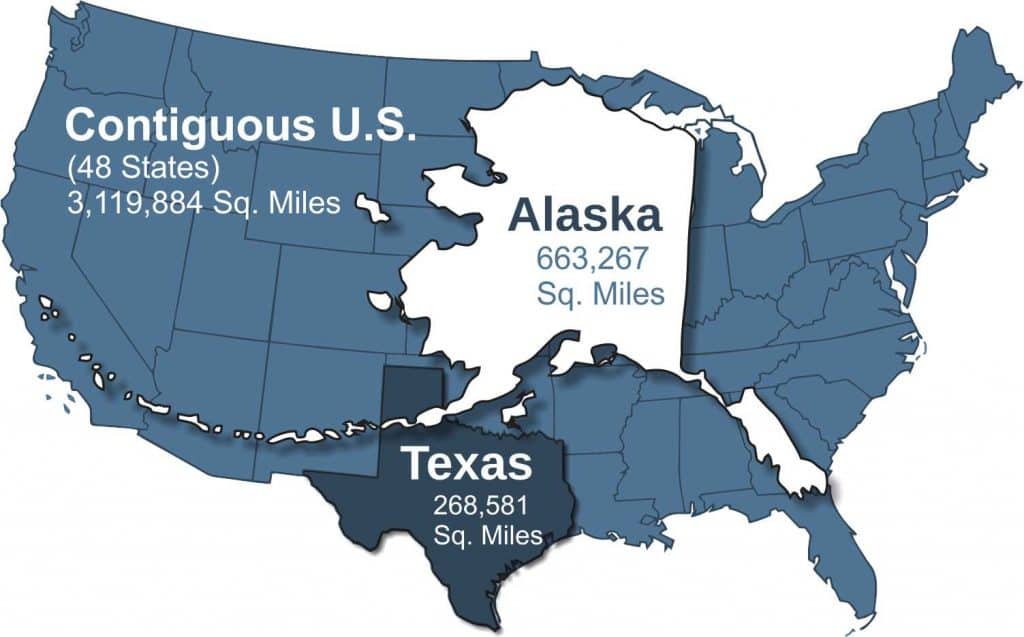
The impetus for this trip was three-fold: Mary and I both are celebrating milestone birthdays within a year of the trip and our 15th wedding anniversary is coming up in a few months. We thought it would be special to dedicate just over two weeks to exploring the Last Frontier and see some national parks. To get to the point: Alaska is huge and it did not disappoint.
How did we even plan for this trip? It’s 2024 – obviously we asked ChatGPT! Mary prompted the search to build out a two-week roadtrip through Alaska visiting as many national parks as possible. We then went analog and cross-referenced it with a PAPER map and made a few revisions. The baseline road trip that ChatGPT spit out was a much easier way to start. We put in some parameters for the maximum amount of miles we wanted to drive in a day and any scenery or noteworthy tourist attractions worth checking out. Huge success. Here is the spreadsheet for the original plan.
For our flights, we flew nonstop from JFK Airport to Anchorage, which was a blessing in the sense that it allowed us to land in Anchorage around 1:30p and use the day to explore and stretch our legs after a 7-hour flight. More importantly, it seems nearly everyone who travels to Alaska connects through Seattle. Our flight from the east coast was about 60% full, allowing us to spread out.

Once we were in Alaska, we had a hotel the first night, but rented a 22′ RV through GoNorth RV to have our transportation and lodging bundled. This gave us incredible mobility as Alaska has relatively few camping restrictions on their main and secondary roads, often called “boondocking” in the camping/RV world. In preparation for the trip, we bought a copy of The Mile Post book, which maps EVERY public road highlighting scenic features and amazing camp sites that were usually free. We camped for free most nights and paid nominal fees when staying inside some national parks. Our only RV costs for lodging were a few nights at RV parks.

Scenic overlook to spot beluga whales 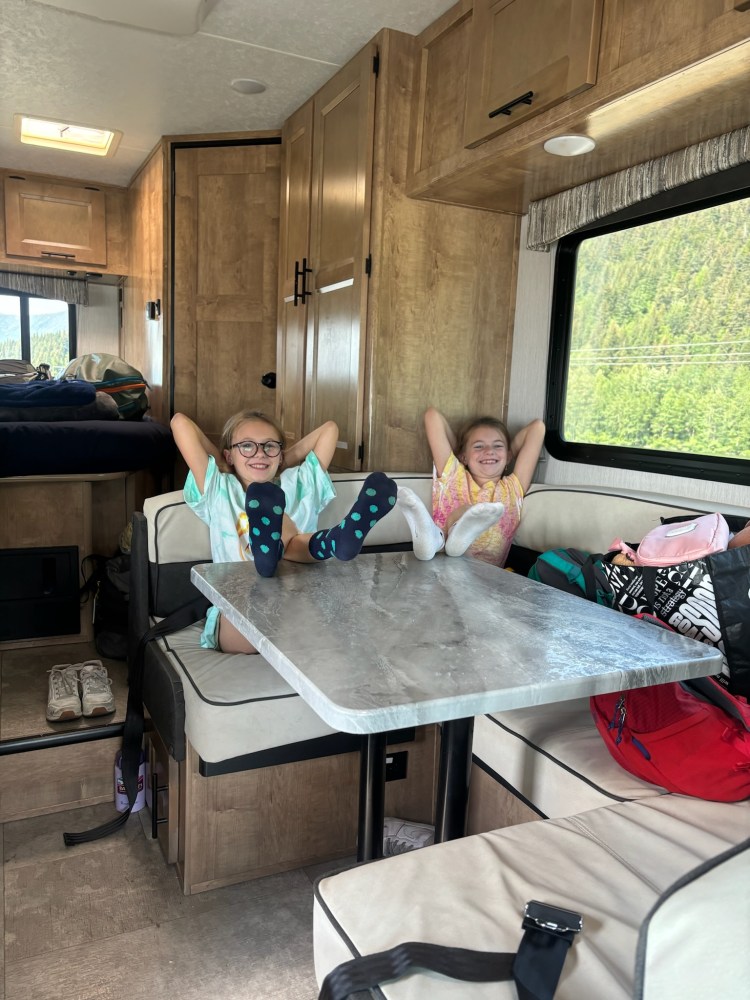
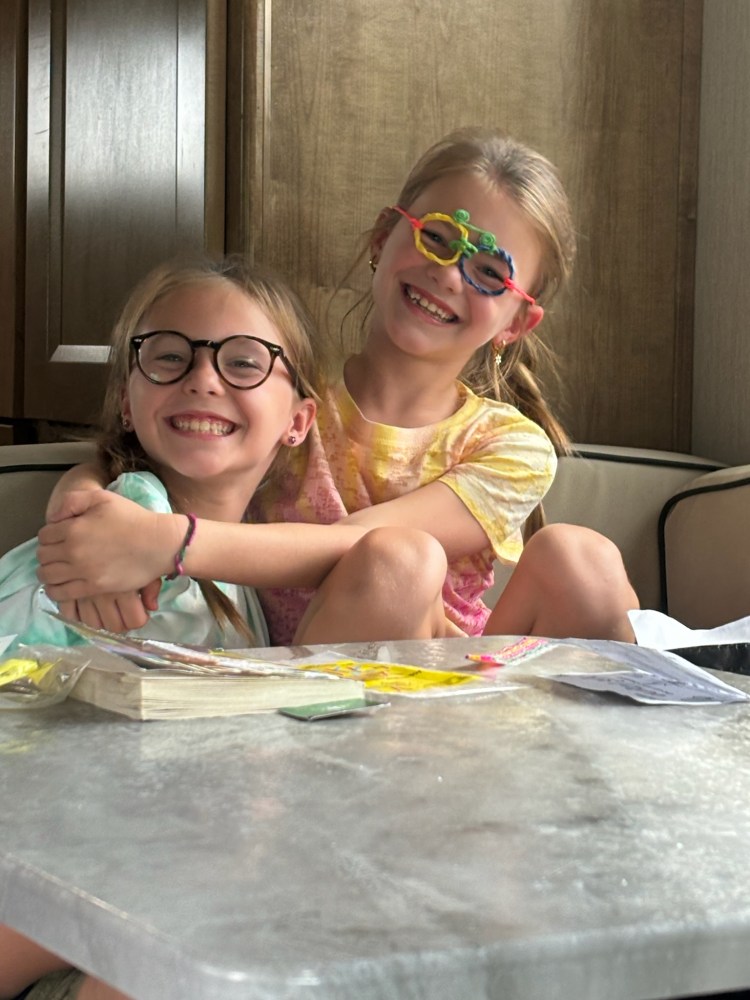
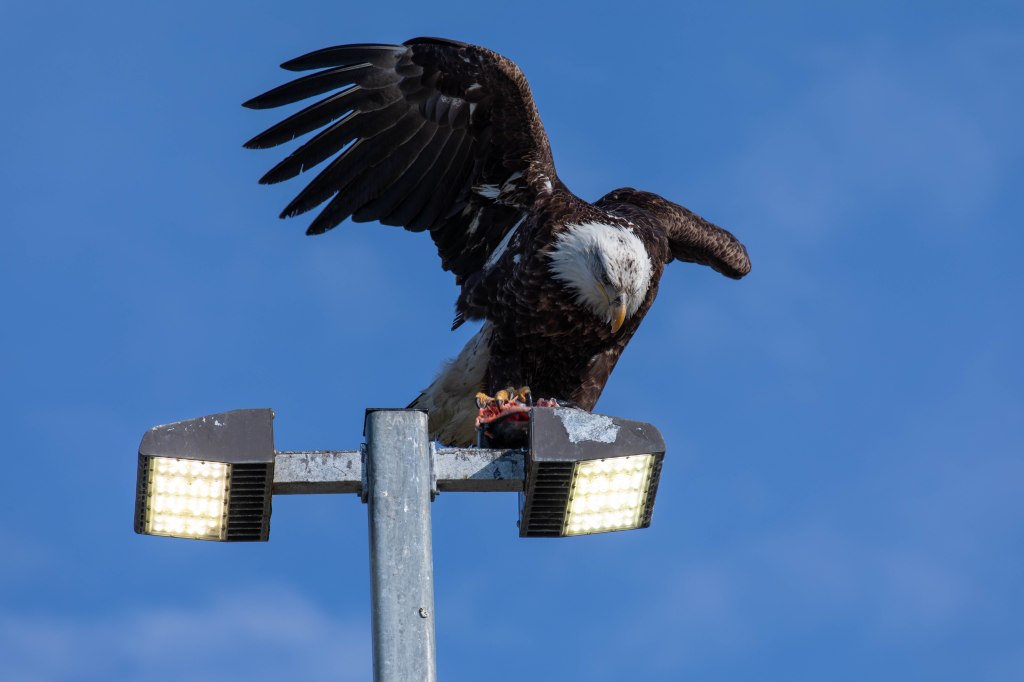
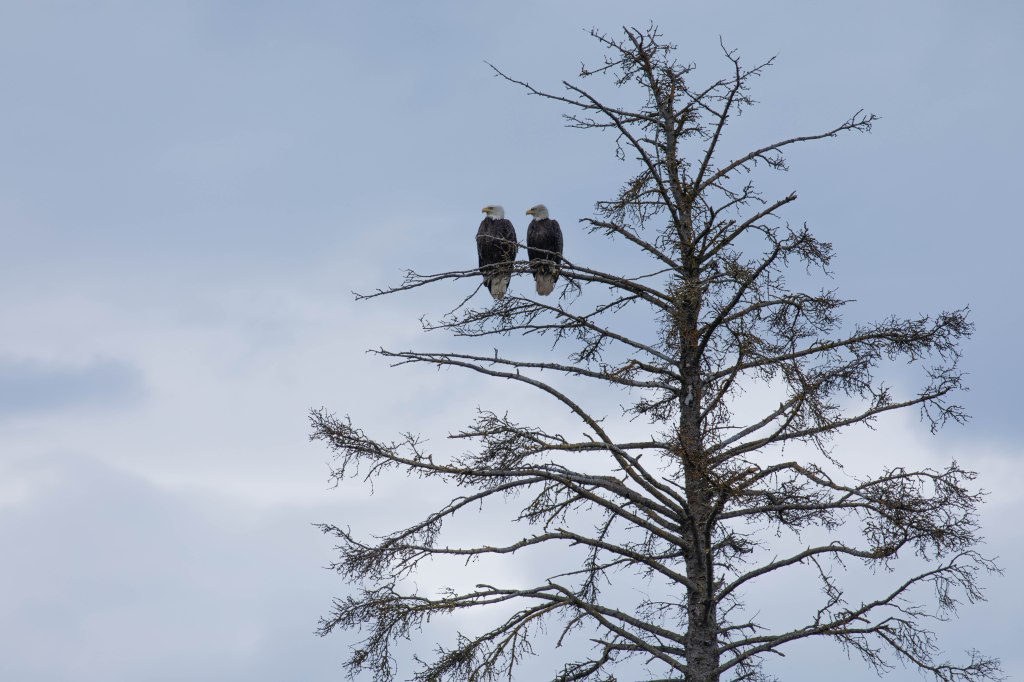
The first leg of the trip had us drive south a few hours from Anchorage toward Homer, a fishing town known for its halibut. Our home for the night was an RV park “down on the spit” of Homer which is a small landmass off the end of the town. It’s a popular fishing spot, so anglers were cleaning their catch nearby. A few bald eagles took advantage of the easy food and had a meal on top of a lightpost near our RV. It was quite the site to watch it eat with no concerns of the humans down below.

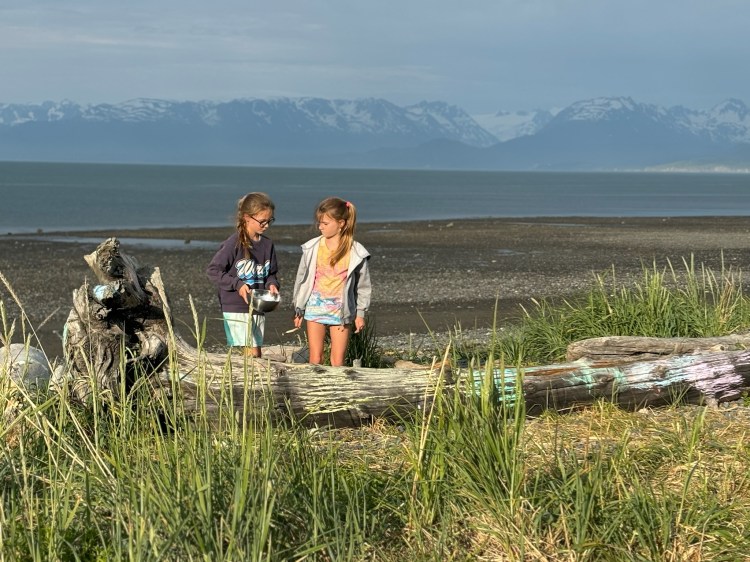
making nature art

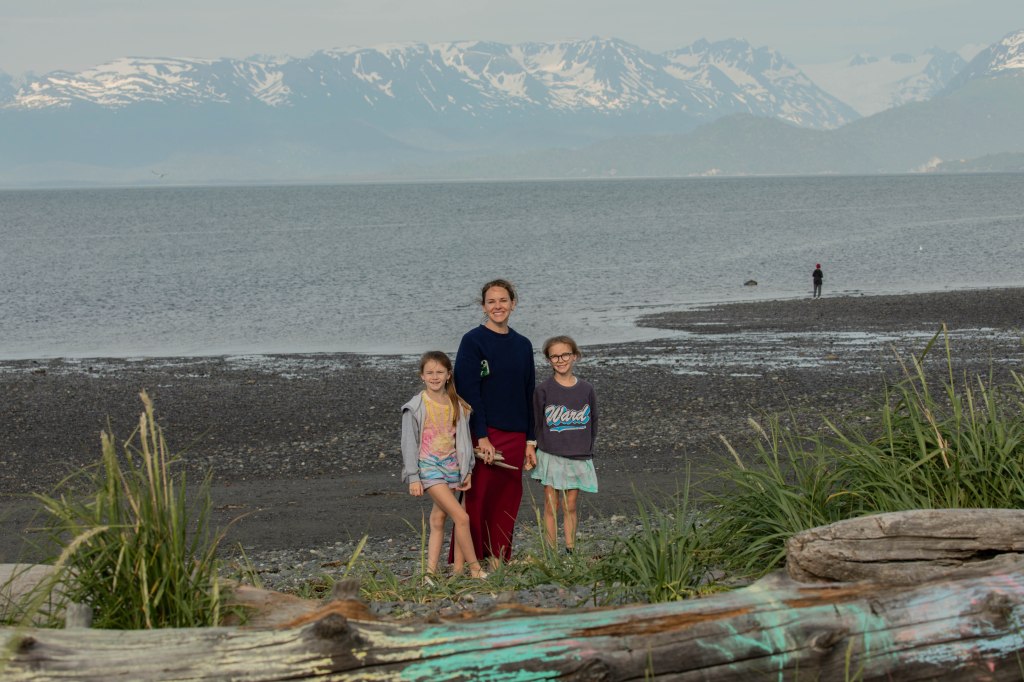
8:30PM on the Kenai Peninsula 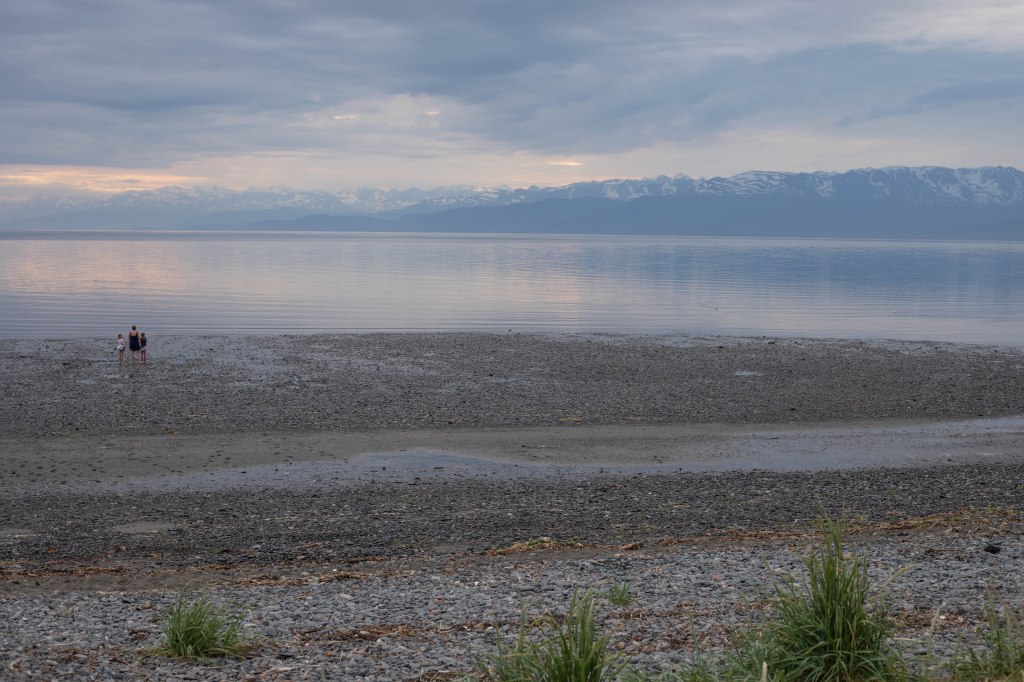
Everything in Alaska is just big- Kachemak Bay 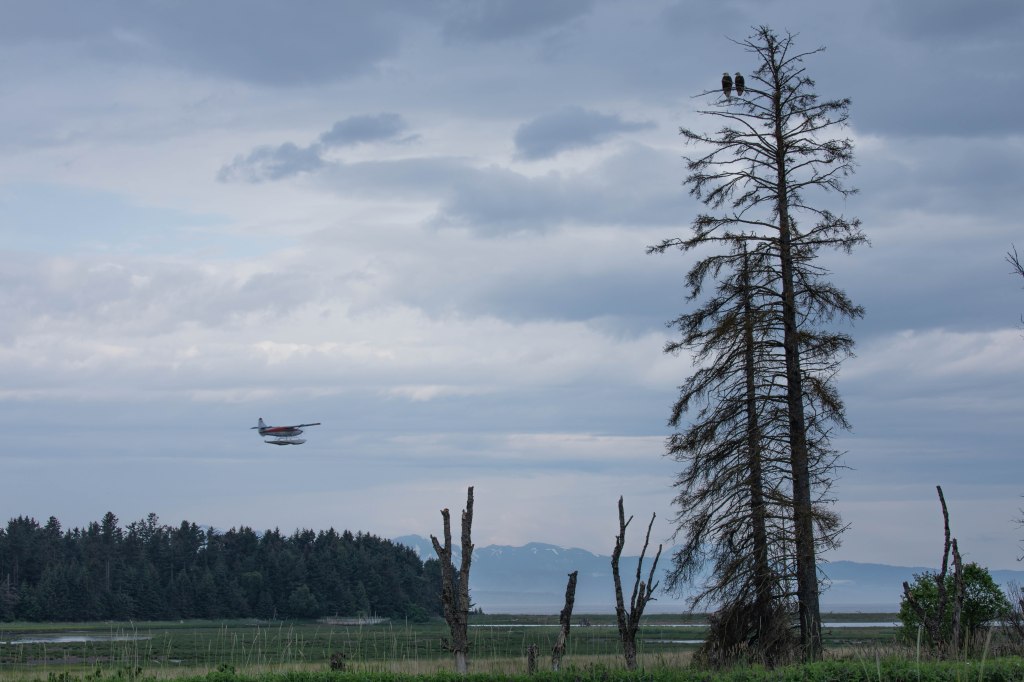
I know what you might be asking about our nights in Alaska: did you see the Northern Lights? The beautiful and magical greens and purples in the sky? Nope, not at all. The reason is because the sun is so high in the sky in Alaska during the summer, they have daylight for 20-22 hours per day. We all brought sleep masks to offset the bright skies when we went to bed. It’s rare when someone comes back to the NYC area and gets excited about the stars in the sky, but we did when we got home.
While in Homer, our focus was visiting Katmai National Park, a remote park not accessible by car and focused on research in the Valley of Ten Thousand Smokes (what a badass name), after a volcano left the entire valley smoking from underneath. Katmai is known for its grizzly bears and the salmon they feed on at Brooks Falls, which has an incredible livefeed. However, when we were there in late June, the salmon had not reached the Brooks River to start their spawning process, so there were no bears in that area of the park yet.
We booked a tour with Scott from SkyDance Aviation, a private tour company out of Anchorage. Scott was extremely helpful and fun throughout the day. As our morning started with cloudy, drizzly weather, we delayed our takeoff to explore Homer, grabbing breakfast at a local cafe while Scott checked in with other tour companies to confirm bear sightings. We ended up charting a path to Hallo Bay where we ended up seeing lots of grizzly bears, a moose, and an imploded volcano.
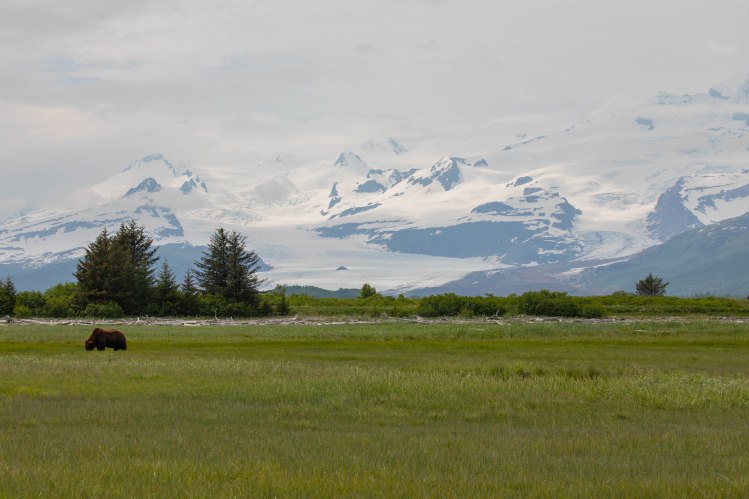
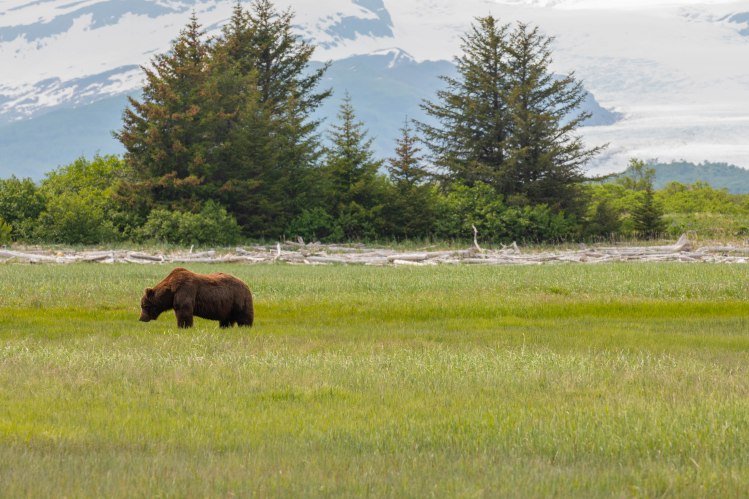
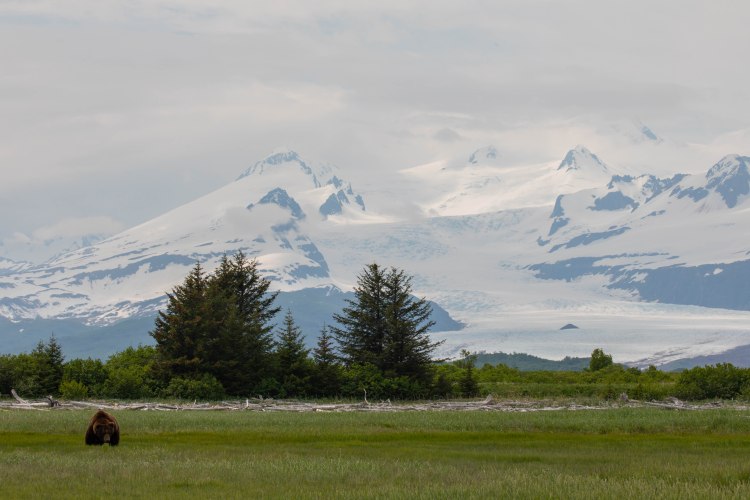
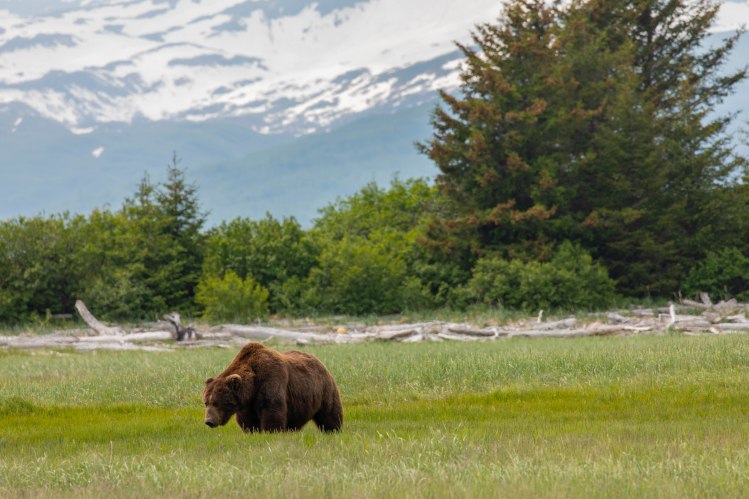
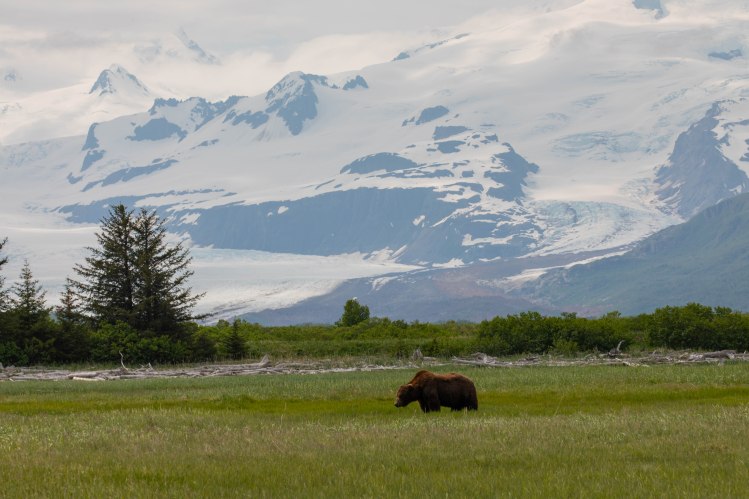
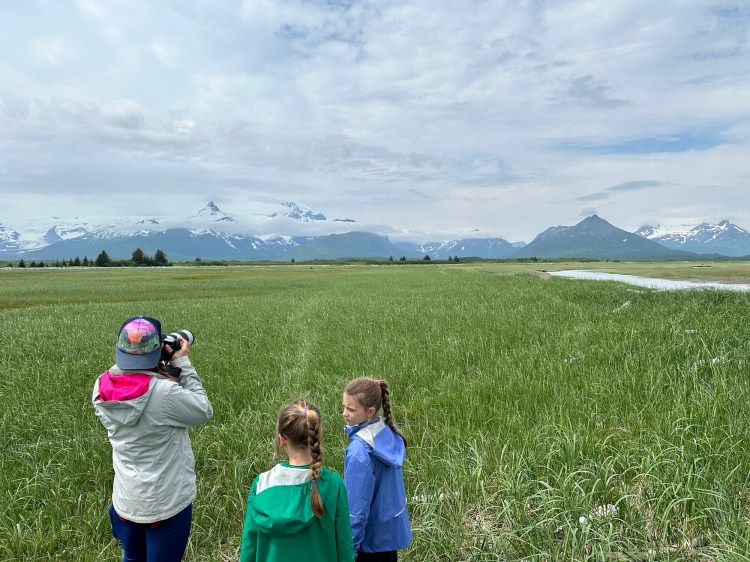
Scott’s plane is a Cessna 185 with floats to allow for water and land takeoffs that has seating for five. Well, three adults and two kids. Five adults would not have fit, so Quincy and Leona alternated sitting in the third row, while Mary and I alternated in the cockpit next to Scott. On our way out to Hallo Bay, we landed in a glacier fed lake to hike on the glacier while listening to energy around the glacier. Tons of cracking and breaking underneath us and around us, just incredible. After that stop, we took off and cruised along the coastline eventually seeing around 30 grizzly bears from the plane. They were all combing the coastal grasses for food, all evenly spaced protecting their territories.
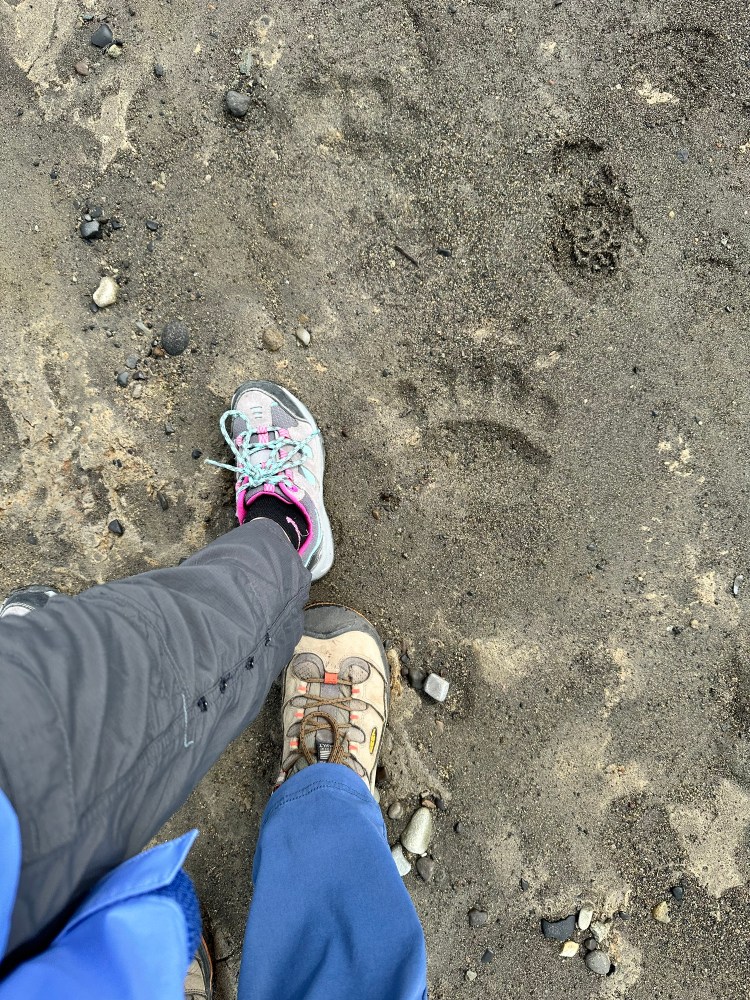
To say the bears are big is an understatement. They can weigh over 1,100 pounds and have heads that are nearly 30″ in circumference. One had walked around the area where we stood and were able to compare my bootprint to it. They are just massive. We hung around that area for 30-35 minutes just watching them graze hoping they would pick their head up for a nice photo. We finally got lucky for a few seconds.
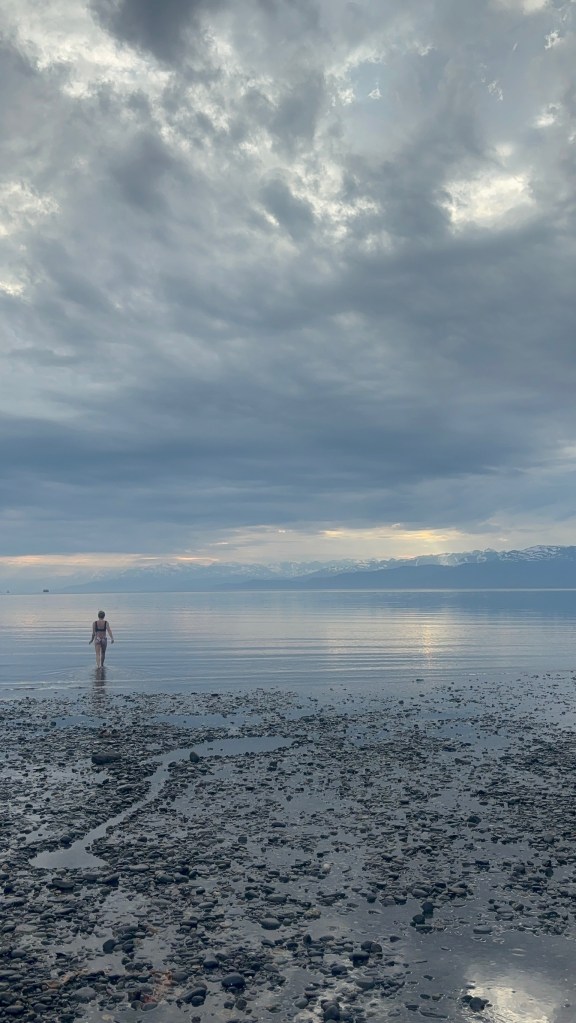
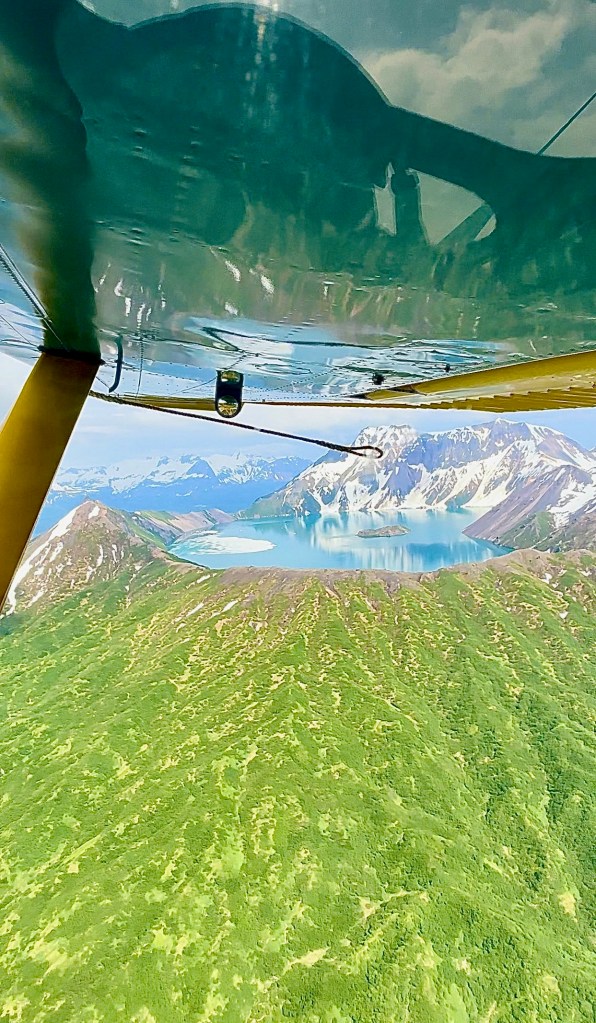
As we took off over the Cook Inlet and Gulf of Alaska we passed Mount Kaguyak, which is a volcano that has a caldera inside after it erupted and collapsed on itself. We circled it a few times and then headed back to Homer. Mary made it a goal to dunk herself in every bay, river, or lake we camped near each night, so she started her plunges in the Kachemak Bay and each dunk seemed to progressively get colder!
The best part of Katmai National Park for each person:
Quincy: seeing the bears, which was the one thing I wanted to see in Alaska, and the imploded volcano/caldera were really cool.
Leona: Grizzly bears.
Mary: The glacier water from a thousand plus feet was incredible to see. So bright.
Sean: having Scott land at the terminus of a glacier was really special because it gave us a really unique place to explore but also showed how nice he was to make the day memorable.
Overall, this was the only place we saw bears in Alaska, which I didn’t particularly mind as I didn’t want to encounter any bears or moose on the hiking trails. It was such a special, raw landscape that blew us all away. The effort needed to see this place also made us realize how lucky we are to explore this amazing country and its natural beauty.
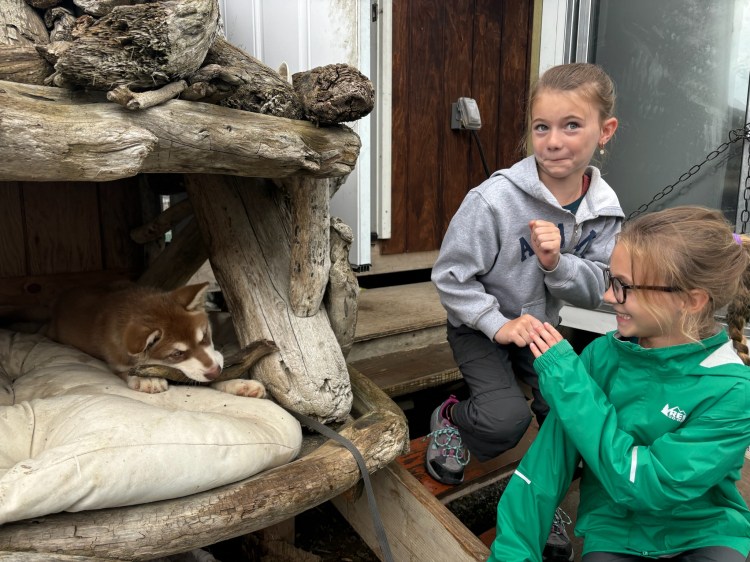
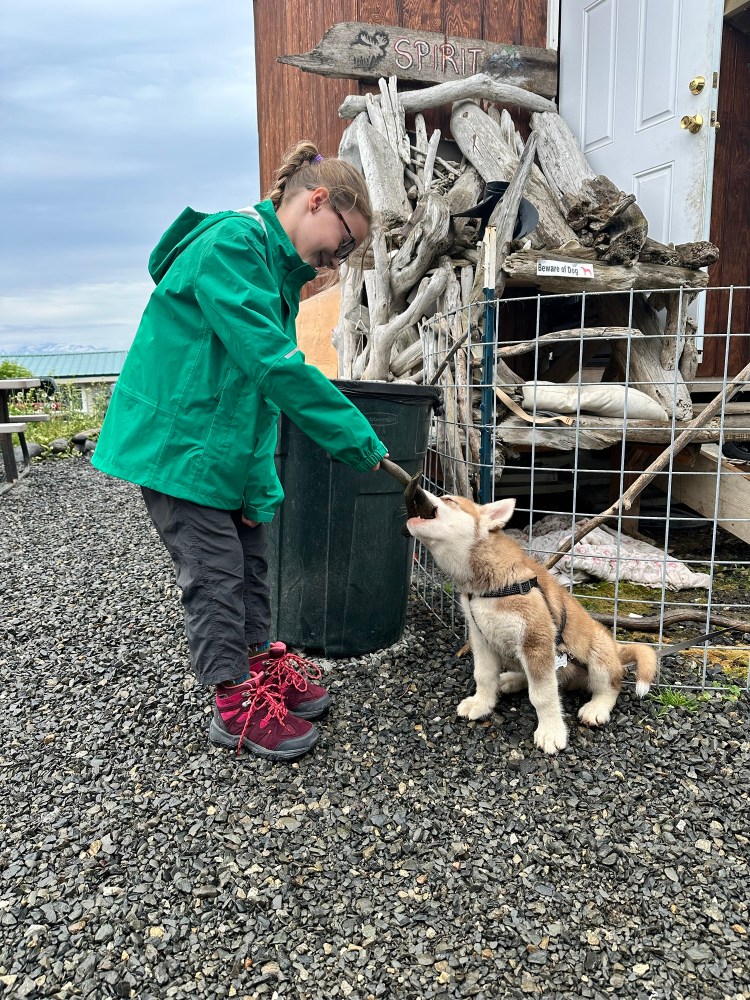
Leona playing with a puppy at cafe 
Quincy in the back door 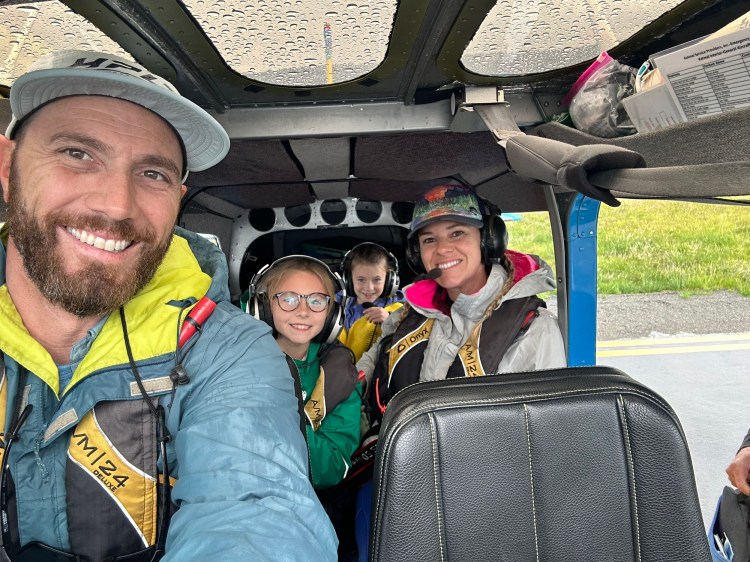
life jackets and headsets-check 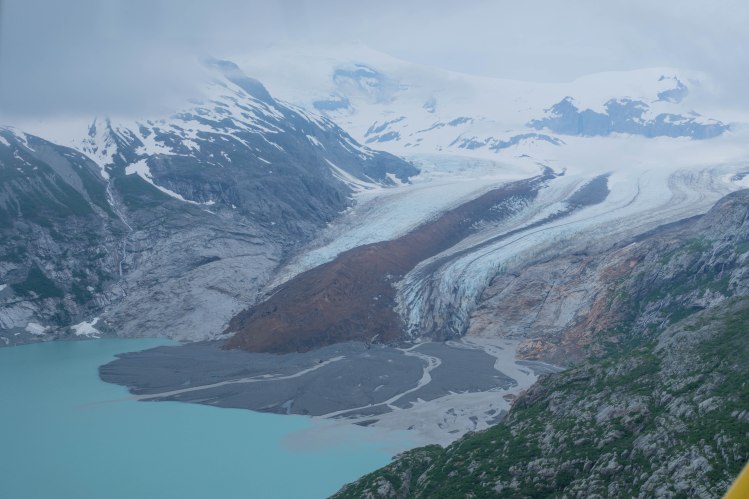
Glacier terminus and lake 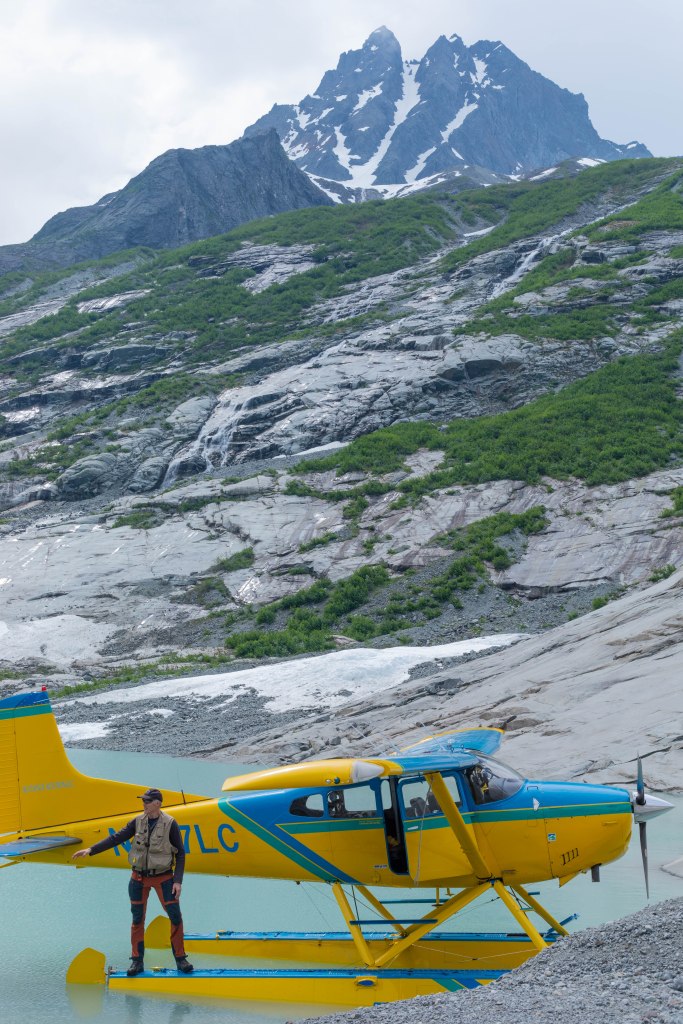
Scott and his plane 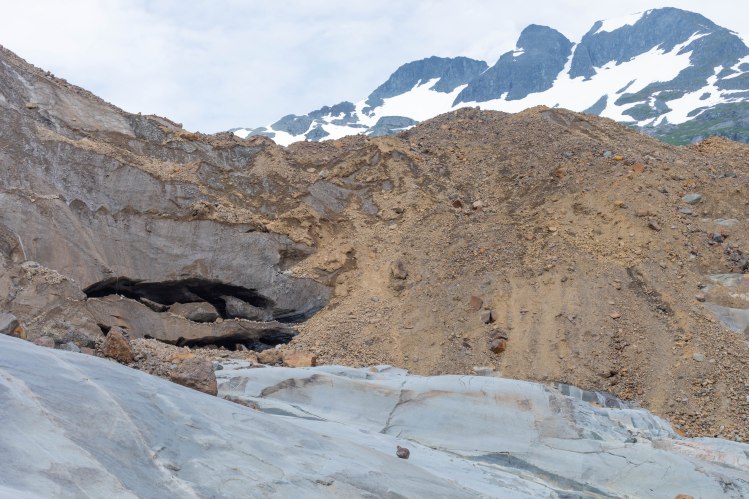
glacier and the rock underneath it 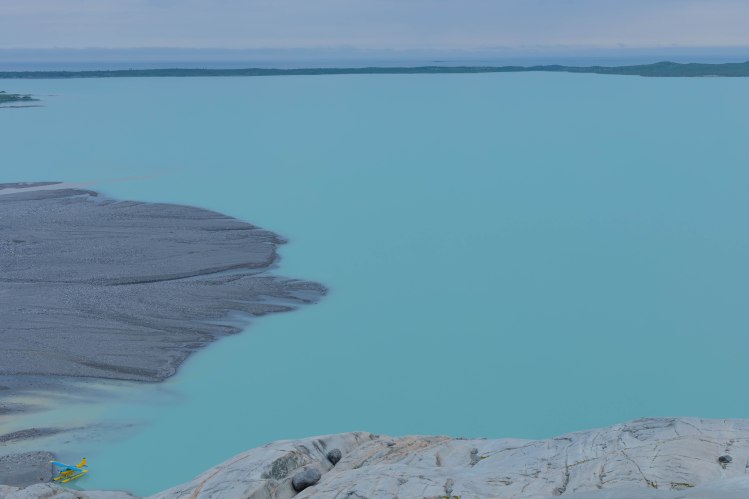
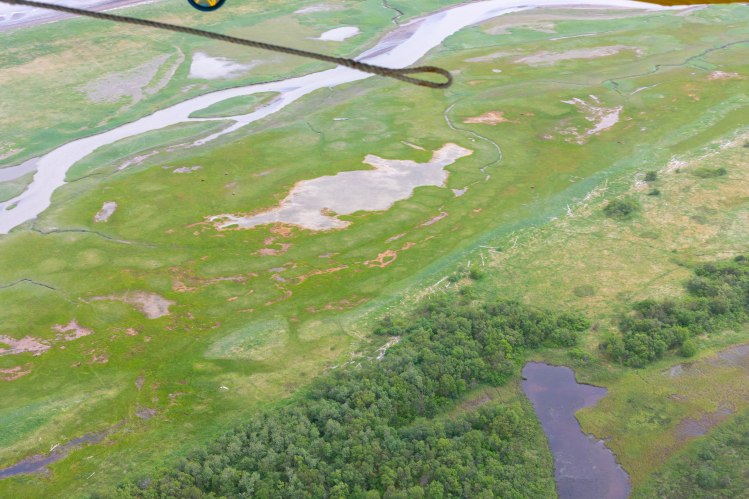
There are about eight bears in the picture 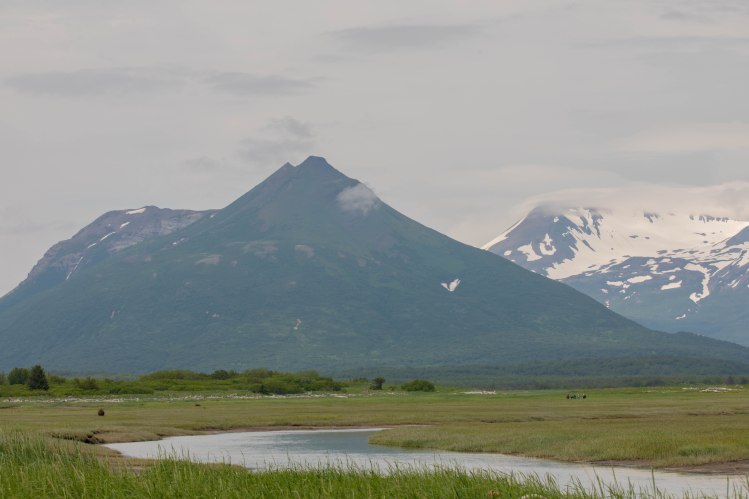
bears on the left, tourists on the right 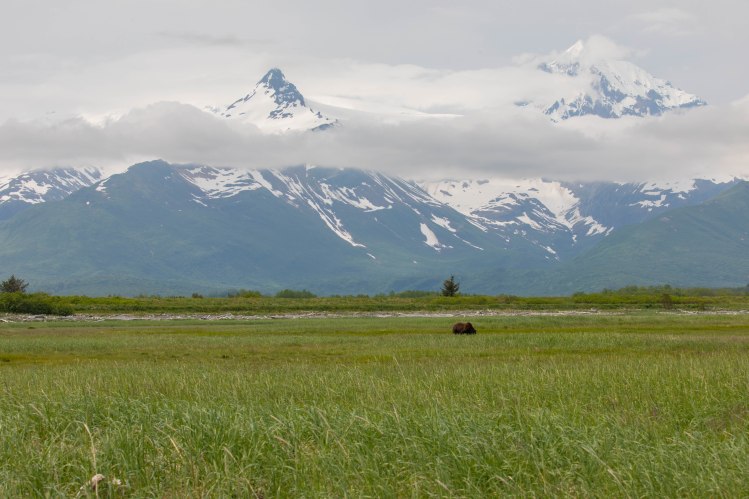
Caldera along Mt Kaguyak


SkyDance in the Glacial lake 
The “spit” 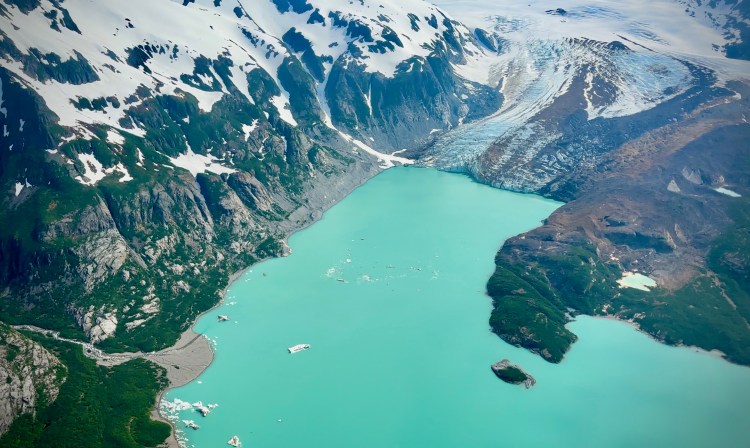
glacier terminus 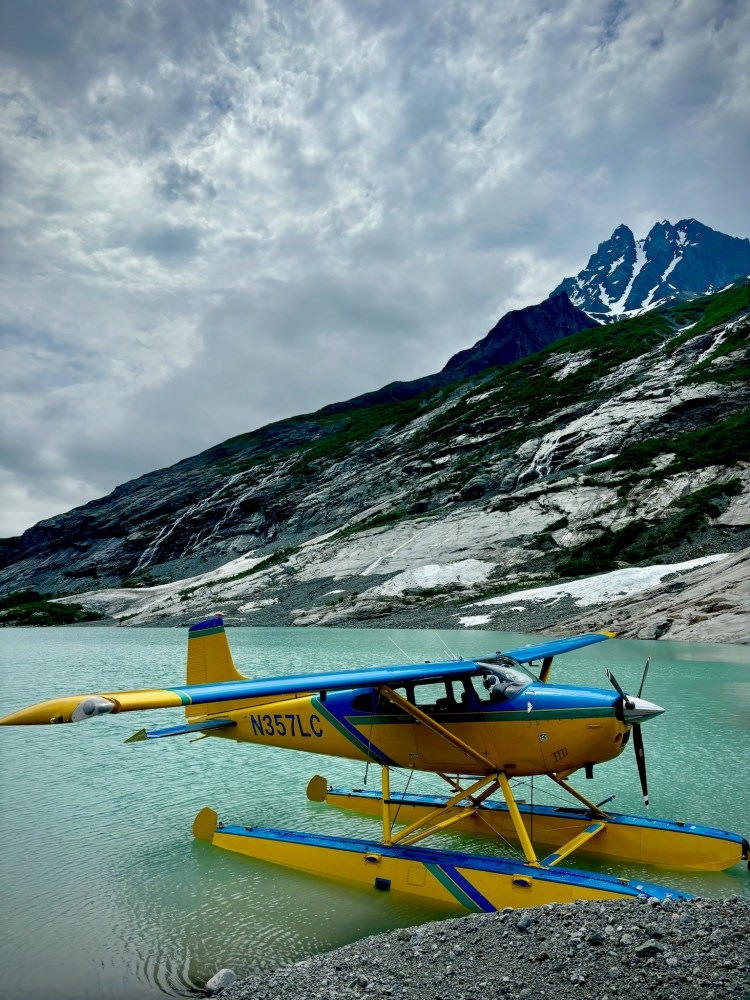
 Adventure Them Young
Beautiful
LikeLike
This is my favorite place you’ve gone. Wow! Just WOW!
LikeLike